Radon is a naturally occurring radioactive gas produced by the decay of uranium found in soil, rock and water. Unlike asbestos, which is a solid material, radon is a gas, making it particularly insidious because it is invisible, odorless and tasteless. Radon can seep into buildings through cracks and gaps in foundations, accumulating to dangerous levels, especially in enclosed, poorly ventilated spaces such as basements.
Characteristics: Radon is a heavy gas that tends to accumulate in low-lying areas of buildings. It is undetectable without specialized testing, making it a significant risk to indoor air quality. The potential for radon exposure can vary widely depending on geographic location, soil composition and building structure.
.
When was the last time you had Radon testing done on your workplace? If the answer is never, you're about to find out why Radon testing is key to maintaining a healthy workplace environment. Radon gas is highly dangerous and can invade buildings undetected. Knowing what to look for and what steps to take will help keep you, your staff and members of the public safe while on your premises from this silent killer.
Radon gas naturally occurs through the decay of uranium in the soil. It is existent in low levels outdoors, making it less of a health risk. Although, Radon seeps into your premises through cracks in walls and floors or poorly-sealed basements and crawl spaces, or any other opening that allows air to enter from the outside of your building. Your building traps Radon in and it will build up over time. As you breathe it in, you and everybody inside the building are at high risk of developing lung cancer.
1. Radon is odourless, colourless, and tasteless.
This makes it completely undetectable by human senses. Without proper testing, one could be breathing unsafe levels of Radon for weeks, months, even years without knowing until it is too late. The only way to know what the Radon levels are within your home is to perform a test using dedicated Radon dosimetry.
2. Radon is everywhere.
Although Radon levels vary across the country, You may find that you have a high level of Radon gas in your building even if you live in an area where it is not common. We have found large variations of detectable Radon within the same building.
3. Exposure to Radon has no immediate symptoms.
Symptoms from exposure to unsafe levels of Radon gas could take years to reveal themselves. Radon has been identified by the Health and Safety Executive (HSE) as the second leading cause of lung cancer in non-smokers in the United Kingdom. This is why Radon is called a silent killer. The higher the Radon level, the longer the exposure, the greater the risk.
Radon causes over 1,100 deaths from lung cancer each year in the UK
The risk from Radon is higher if the person is an ex-smoker and significantly greater for current smokers.
4. Radon gas can be present and build up in any building.
Not only is it recommended to test your workplace for Radon, including schools, offices, and any place of business, but also your home could be affected. Consider a home testing kit from us.
5. Radon levels are highest during the winter months.
Due to doors and windows being kept closed to keep the premises warm, Radon levels can increase.
Radon produces a radioactive dust in the air we breathe. The dust is trapped in our airways and emits radiation that damages the inside of our lungs. This damage, like the damage caused by smoking, increases our risk of lung cancer.
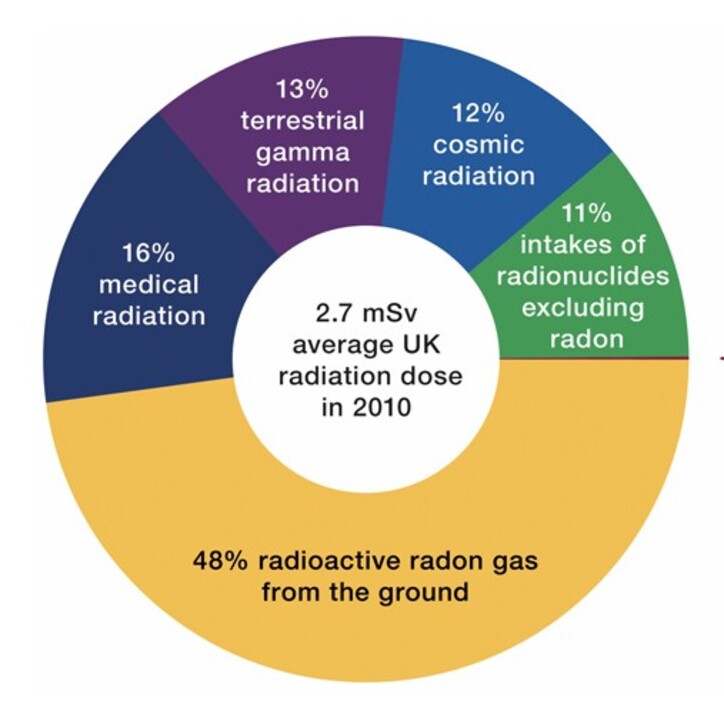
The risks to your health from radon
High levels of radon can cause lung cancer, particularly for smokers and ex-smokers. Radon produces tiny radioactive particles in the air we breathe. Radiation from these particles damages our lung tissue, and over a long period may cause lung cancer. The higher the level and the longer the period of exposure, the greater the risk will be.